
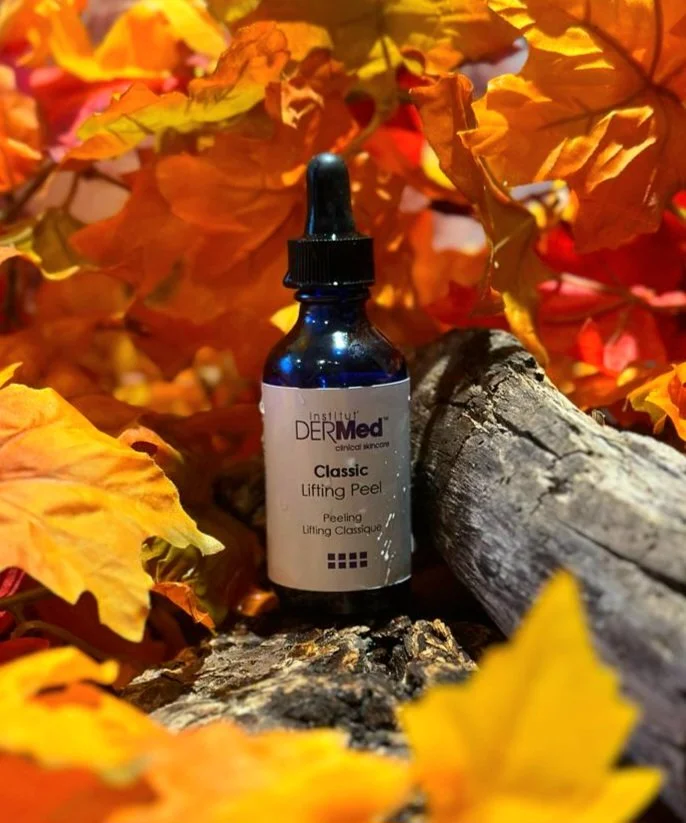
Welcome Back Peel Season (Anti-Aging)
The easiest way to describe aging is as a natural breakdown of the elements of our body tissue. Our tissues are always breaking down and rebuilding, but with age we get more breakdown than rebuild: like taking one step forward but two steps back sometimes. In the skin, this translates to a loss of firmness creating fine lines and wrinkles, dermal thinning, build-up of dead skin cells, less oil production and so on. The skin is not functioning optimally anymore.
What is aging?
The easiest way to describe aging is as a natural breakdown of the elements of our body tissue. Our tissues are always breaking down and rebuilding, but with age we get more breakdown than rebuild: like taking one step forward but two steps back sometimes. In the skin, this translates to a loss of firmness creating fine lines and wrinkles, dermal thinning, build-up of dead skin cells, less oil production and so on. The skin is not functioning optimally anymore.
How to keep you skin and body from aging? Well that is a big question...There are many treatments and products that address different aspects of aging like dryness, fine lines and wrinkles due to loss of firmness, cell turnover etc. But for true anti-aging results there is no one approach: it is an accumulation of healthy choices and the continuous use of products made with natural, good for the skin ingredients.
What are Peels?
Peels safely remove the outer most top layers of the epidermis that has become old and damaged by time: dull, wrinkled, scarred, pigmented, or is otherwise no longer serving its purpose. To reveal healthier skin underneath, we remove the old skin cells and grow healthier new ones in their place. We do this in the natural world of skin care by using exfoliants and natural peel agents. As well as creating a good environment for healing and growing the new skin cells. Here at The Natural Art of Skin Care we can help make this process understandable and achievable. Step-by-step! We have a variety of natural peel agents to best suit your skin:
Glycolic Acid - derived from Sugar Cane and is a AHA (Alpha Hydroxy Acid). It is an acid that is used to remove lines, wrinkles, pigmentation, and scaring. One of the most widely used in the skin care industry.
Lactic Acid - comes from sour milk and is an AHA - naturally exfoliates without interrupting the skin's natural moisturizing factor. Derived from sour milk, yogurt or beer, it is also an AHA used for its potent acidic properties to gently exfoliate and clarify the skin without the worry of dehydrating the skin. Great for work on pigmentation too.
Salicylic - Derived from willow Bark and is a BHA (Beta Hydroxy Acid). In this case it helps to break through oil and clogs and remove skin cells to reveal brighter newer looking skin. It is commonly used in acne peels as it has the ability to somewhat "reset" the sebaceous glands.
Natural Enzymes - papain from papaya, protease from pumpkin, bromelain from pineapples, malic from apples, etc. These are mild and great for sensitive skin types.
Sometimes we even use enzymes to "pre-peel" in house since they only digest dead skin cells, whilst leaving everything else intact. Used for pigmentation, fine lines, wrinkles, pigmentation and sensitive skin.
Important notes if you are considering a peel:
In-house peels are stronger than anything you can buy at a drug store. They require training and skill to use, and all peels should be overseen by an experienced medical esthetician. Peels give great results, but need to be taken seriously. There is no safe level of sun exposure whilst getting a course of peels. Please use extreme caution and wear sunscreen, physical sun protection, and don't plan to be out doors for long periods of time.
Talk to your skin care professional to help better determine where peels will fit into your schedule.
Time to feed the skin
In any good relationship - you cannot take without giving back. This goes for skin care too; especially when you are peeling and taking away. If you take time to peel you must take time to feed your skin too...This is why skin care is so important to your overall goals of staying young or reversing the clock to more youthful skin. The ingredients within the products that you spend your hard earned dollars on should feed your skin with natural, healthy vitamins and nutrition-rich ingredients to continue the anti-aging process for luminous, youthful skin. That's why at The Natural Art of Skin Care we only sell products with all natural, good for the skin, healing ingredients from popular organic lines such as Eminence and DerMed that yield fantastic results for clients with all skin types.

Beauty From The Inside Out.
Here at The Natural Art of Skin Care we have put a large effort in supplying high quality skin and body care to all of our clients. Topical skin care is an obvious asset in the fight against skin conditions, and we pride ourselves on providing an array of great tools in that fight. But, there comes a time when we have to talk about the inside environment that can contribute to your skin condition.
By Rachel Lamont - Medical Esthetician
Here at The Natural Art of Skin Care we have put a large effort in supplying high quality skin and body care to all of our clients. Topical skin care is an obvious asset in the fight against skin conditions, and we pride ourselves on providing an array of great tools in that fight. But, there comes a time when we have to talk about the inside environment that can contribute to your skin condition. Over the years, I have seen the beautiful, good, bad and VERY BAD when it comes to the skin's condition. If you have seen me for a skin care consultation you know by now that I ask many questions about skin care, lifestyle, family history, stress and DIET. This last topic, diet, is extremely important to me.
You cannot have healthy looking skin without a healthy diet. This is especially true as we age. When you are young you may be able to hold off the damage you are causing by not eating right, but sooner or later it will catch up with you. We all know this to be true when it comes to our body's overall appearance, but most of us forget that it is also true for the appearance of our skin. Trust me, I've seen it! Your body uses the food you eat to make everything that is you, including your skin, down to the last cell. If you eat unhealthy food, then your skin will be unhealthy too. Bottom Line!

It is my pleasure to introduce to you one of my secret weapons I use against skin problems, Holistic Nutritionist Marie-Claude Beaulieu.
Marie-Claude, owner of Gutsy Nutrition, is a holistic nutritionist who provides a Holistic & Integrative approach to health, offering science-based guidance on holistic nutrition, by bringing together her expertise in Immunology, Medical Laboratory, and Nutrition.
Marie-Claude can work with you to uncover the root cause of your signs and symptoms. She can guide you on how to reduce inflammation and replenish the nutrients necessary for proper healing, regained health, vitality & beauty from within. She has been a great asset to my clients in regards to helping figure out the internal components of skin problems, while I address the external concerns, healing and calming the skin with treatments and topical aids.
I feel so lucky to have Marie-Claude join our team as a consultant 1 day a week. She will also be helping us with some of our new seminars coming up, to assist in educating us all on how to use food as a weapon against skin problems. I am very happy and proud to have this all come together for us.
Skin is just a mirror to the inside world. By looking at someone's skin, it is possible to tell things about their lifestyle; including if they eat well or not. A good diet consists of a colorful variety of whole foods. Make sure you get your clean proteins, good healthy fats and all your vitamins and antioxidants, clean water and avoid sugar. I am going to give you a sneak peek into whatgood skin health from the inside out is all about but you'll have to participate in the seminars to learn more. There is too much knowledge to share and this article would go on forever.
Skin Nutrition - a Sneak Peak
Proteins
Protein is full of amino acids that create collagen in your body. Collagen is a substance that makes your skin firm, plump, strong and over all youthful. To build collagen you need a few key ingredients - protein is one of them. Always make sure your source is a clean protein. If it is animal source then you would want it free of hormones and antibiotics. Grass fed is ideal, and also must be steroid free and so on. Foods like wild salmon, free range chicken, organic eggs, and bison are all good choices. If your protein is vegetarian, make sure it is not genetically modified (GMO) or sprayed with any pesticides, herbicides or other chemicals. Great vegetarian sources are nuts, seeds, and beans. Even your vegetables have protein in them like broccoli and avocados. I love Vega One Complete Shakes too.
Good Fats and Oils
Good fats are also very important for healthy skin. The "good fats" are the essential fatty acids (usually abbreviated EFA). Omega 3 being very important! We usually have an abundance of Omega 6 in our diets, and to balance that, it is important to seek out Omega 3 whenever you can. EFA's play a number of different roles in healthy skin. Good fats transfer oxygen throughout our body and into the skin, they help block foreign bodies and bacteria, they are also responsible for making the skin soft and supple and retaining water to prevent dehydration. They combat inflammation in the skin, which would other wise damage skin cells, collagen and elastin. Great sources of fats are olive oils, avocados, nuts, coconut oil, and fatty fish like wild salmon and tuna. It is best if you don't fry or process your oils, as they can become carcinogens.
Vitamins, Antioxidants and Minerals
There is a rainbow of many different, colorful yummy sources of Vitamins and Minerals. Antioxidants such as beta-carotene and vitamins A, B, C, and E, flavonoids, enzymes, zinc; the list could go on forever. These are very important because they help build and heal the skin. They are also responsible in fighting against unstable molecules known as free radicals. Free radicals harm and break down skin cells and cause inflammation, thus causing signs of aging; kind of like rust on a car. One of the best ways to get more antioxidants is to eat a wide variety of raw fruits and vegetables, nuts and seeds of all different shapes, sizes and colors.
Water
I find when talking to clients that many of you are not consuming enough water daily. Everyone is running through their day too fast, and not taking time to drink some H2O. The human body is made up of between 55 and 75 percent water depending on size and composition, and is therefore essential to our wellbeing. Water is also a key component in detoxifying the skin, and obviously, a major factor in how hydrated your skin looks.
The Institute of Medicine determined that an adequate intake for men is roughly 3 liters (about 13 cups) of total beverages a day. The average for women is 2.2 liters (about 9 cups) a day.
Sugar
I hate to say this but sugar is not good for the skin. Sugar causes acidity and inflammation in the skin, which simply put, breaks down the skin's integrity. It can be a contributor to some skin conditions like acne and rosacea, both which are characterized by the inflammation response surrounding the lesions. There is also a condition called "glycation". In the skin glycation attacks the collagen and elastin tissue. When those proteins hook up with renegade sugars, they become discolored, weak, and less supple; this shows up on the skin's surface as wrinkles, sagginess, and a loss of radiance, which are all the signs of aging skin. Sources of sugar to avoid are: ANYTHING made with flour, table sugar, candy and soda, sugary cereals and bars.
Cleanses and Detoxifying The Body
Often I get clients that come into the spa with certain skin care concerns, and it is very apparent that it is just time for a cleanse. I have done many different cleanses over the years to help out with my own health issues, and every time I do my skin looks healthier too. In Chinese medicine the skin is considered the 3rd lung. In western medicine, we know that the skin is a way the body detoxes itself. Sometimes with this fresh start, we help the body get rid of the problems, while re-balancing and re-attuning ourselves to the nourishment we need.
At the end of the day our skin is a telltale sign of our inner health; usually letting us know about the stress in our lives, toxic buildup, and nutritional behavior.
Remember your skin is the most important suit you will ever own - take care of it. And your body is the more important vehicle you will ever drive -keep it clean.

Finding the Fountain of Youth with DERMed
We are so excited to show all of our clients the world of peels, retinols, and added vitamins and peptides that really bring the Medical and Natural sides of skin care together beautifully. Institut DERMed is an amazing skin care line that I have been researching, and salivating over, for a few years now. I am very proud to announce that we will be now be carrying key products from this line, to work in conjunction with the much-loved Eminence Organics line
Okay, we haven't quite found The Fountain Of Youth, but with DERMed we’re getting closer…
We are so excited to show all of our clients the world of peels, retinols, and added vitamins and peptides that really bring the Medical and Natural sides of skin care together beautifully. Institut DERMed is an amazing skin care line that I have been researching, and salivating over, for a few years now. I am very proud to announce that we will be now be carrying key products from this line, to work in conjunction with the much-loved Eminence Organics line. These great new products will add to the fight against acne, scarring, sun damage, and the inevitable - aging skin. DERMed products are packed full of active ingredients that fight collagen loss, elasticity problems, clear up acne skin, help cell turnover, and much much more!
DERMed has a fantastic range of professional, in-office peel options that can really take the results we have already achieved together to the next level. I have been blessed that I have worked with many modalities and equipment over my 10 years as an Esthetician. I have used everything from dry ice on cystic acne lesions, lasers, radio frequency machines, Galvanic machines, and of course, PEELS!
Through my journey, I have always loved to use cosmetic peels to help with correcting the skin. They are an indispensable tool for acne, sun damage, and aging. But, as many of you know, my practice always starts with cleaning, healing, and feeding the skin. I will never forsake the health of your skin just to do a peel. For that reason, I want to talk a bit more about DERMed, their peels, and what they can and cannot do for you.
This line has both an at home, and an in-office component to it, and I would like to touch on both in this article. If however, you would like some education on the at home care or in-office peels, please feel free to book an extra 15 minutes onto your next facial so we can go over the line and it's possible place in your skin health regime. So please enjoy this handy-dandy FAQ sheet, and let us know if you have any other questions
What Is a Peel?
A peel is a skin treatment technique used to improve and smooth the texture and pigmentation of the skin using a solution that causes the dead skin to slough off and eventually peel off. There are different types of solutions. Anything from enzymes, natural acids and chemicals are used to peel the skin. For this reason, peels are not to be treated lightly. Just like lasers or needles, or any other medical-aesthetic tool, they can cause damage if not respected and treated carefully. Conversely, a deep understanding of the skin coupled with an invaluable tool like a peel, can really yield good results.
Am I a Candidate For a Peel?
First thing's first: This is by far the most important thing I have to say about the world of peels. Please know that there is a beautiful dance between peeling the skin, and feeding or healing it. And both things are useless if not protecting it ALL THE TIME from future damage. If you are a client of ours you will already know this: Feed and protect always, and where needed, peel smart. There are different levels and strengths of peels, and results are often better when doing multiple "milder" peels, than one very deep peel. Different levels and strengths mean that peels are suited for most skin conditions, and can even be used just to "freshen up" the look of skin. Unfortunately, beyond saying that you MUST be (or become) a consistent sunscreen wearer, we won't know if you are a peel candidate until you come in for a complimentary consult, so please feel free to book one.
Tell Me About DERMed Home-Care Products.
When peeling the skin you always want to make sure it is healthy before you start. I recommend feeding and nourishing the skin for some time before getting into peels. This ensures that you heal in the best and fastest way you are meant to, and that the new skin we reveal is of high quality.
Cleansers and Toners:
With DERMED, you now have the opportunity to add Glycolic Acids, Lactic Acids, and Ascorbic Acids (Vitamin C) to your regime. They are present in the treatments for home care including the cleansers and toners. This helps with skin-cell turnover, which perks up a dull, graying, aging complexion. Adding these actives to a regime can also help with acne by keeping the pores clear of build up, and reduce pigmentation by helping to slough off the older discolored cells. And that is only the cleansers and toners!
Serums and Boosters:
We also now have great Serums with boosts of vitamins and peptides to get the skin in great shape, and in some cases to help to build back new skin cells. For instance, Vitamin C is needed to grow new collagen, without proper amounts of Vitamin C, the skin cannot properly grow and sustain the new growing collagen that is the result of peeling the skin. Vitamin C also plays a very important role in fighting pigmentation. DERMed also has a great peptide serum to help promote new collagen growth. This is very beneficial when doing peels! This great line also has an Epithelial Growth Factor serum derived from yeast to help grow healthy skin back after a peel. This line has great pigmentation home care with proven ingredients like Kojic acid and Licorice, that are well studied to naturally lighten the skin. Really, the list of benefits for this line is endless!
And What About The In-Office Peels?
In house is where the real magic happens...
Here our trained estheticians can help professionally peel off signs of aging, pigmentation, scarring; as well as help with severe acne and calm and clean the skin. But remember, depending on the peel level, we may peel off the old skin, which does mean you may be a bit red or shedding skin for a few days.
I Have Decided I Want a Peel, So What's Next?
If you have decided to get a peel, your first step will be to set up a complimentary professional consult with your esthetician and together you will build a plan to meet your skin's needs, and help get your skin back in shape. Depending on your individual condition and concerns, we might start you on home care first, prior to your peel.
We are really excited to have this new line here at The Natural Art of Skin Care, and we hope you are too. Book your complimentary consult today, and get one of our professionals to help you designs a healthy plan for better looking skin. We can't wait to see (a more glowing and radiant) you!
Formulated with Micro-encapsulated L-Retinol and Glycolic Acid to smooth fine lines and wrinkles, reduce the look of age spots and diminish the signs of aging for a more youthful-looking complexion.
Good-bye Dry Skin!
We have all felt it at one point or another, that flakey, dry, itchy feeling that plagues every Calgarian as soon as the weather takes a turn for the worst. When I moved from Kelowna to Calgary in 2008, I thought I was going to need a nightly soak in a tub full of moisturizer; I had never been so dry in my life!
Good-bye Dry!
by Shyla Rood
We have all felt it at one point or another, that flakey, dry, itchy feeling that plagues every Calgarian as soon as the weather takes a turn for the worst. When I moved from Kelowna to Calgary in 2008, I thought I was going to need a nightly soak in a tub full of moisturizer; I had never been so dry in my life! Thank goodness I went to esthetic school and I was not the only one that was dealing with cracked, dry skin. Have no fear a cure is here!
A Quick Skin Lesson:
Skin is the largest organ in the human body; it interfaces with the environment and is the first line of defense from external factors. The skin plays a key role in protecting the body against pathogens and trans-epidermal water loss, it also regulates body temperature, sensation and the production of vitamin D foliates. When skin becomes dry and irritated the level of protection is lowered causing sensitivity, cracking and sometimes infection.
Why we get dry:
- Lack of hydration - are you drinking enough water?
- Low humidity - Calgary's climate or office air
- Artificially Fragranced Soaps/body washes and other products -fragrance is just an irritant and a carcinogenic, it does not help your skin!
How to say "Good-bye" to dry skin:
Exfoliation- feeding your skin is important but you want to make sure you're feeding the healthy skin that needs to be fed and not wasting product on dead skin cells. Lactic Acid is a great way to gently exfoliate the skin without scratching and irritating it, try the Strawberry Rhubarb Dermafoliant by Eminence.
Shorter Showers/Chemical Laden Soaps - Long or frequent showers remove protective oils that the skin naturally produces. When the oils are lost, water from the skin also escapes. Using harsh soap can exacerbate the effect. Soap cleansers are alkaline, which are damaging to the skin, they can aggravate dryness and leave your skin feeling tight and even, eventually, lead to a rash.
Moisturize - Don't skip this step! Protecting your skin for the elements is very important. Finding the right moisturizer for you depends on your skin type, my personal favorite for the winter is the Firm Skin Acai Moisturizer due to the hyaluronic acid. Hyaluronic acid is a complex sugar, known as glycosaminoglycan, and is found throughout the body. It is particularly prevalent in connective tissue, the synovial fluid around joints, the eyes, the heart, the intervertebral spinal disks and the skin. It transports nutrients to cells and removes toxins, it acts as a cushioning agent, it lubricates joints and, importantly for the skin care industry, it facilitates water retention in body tissue. In fact, hyaluronic acid can absorb more than one thousand times its weight in water!
Humidifiers: A quick and simple way to help your whole family beat the dry skin blues is an in home humidifier. There are point-of-use humidifiers, which are commonly used to humidify a single room, and whole-house or furnace humidifiers, which connect to a home's HVAC system to provide humidity to the entire house. A relative humidity of 30% to 50% is recommended for most homes. Humidifiers are not only useful for skin ailments but also help prevent nose bleeds, asthma symptoms and scratchy throats. When looking into a humidifier please make sure you check out all of the options, there are many different types and depending on your family's health concerns steam vs. cool-mist can make all the difference.
The best way to treat and prevent dry skin and breakouts is to have an esthetician by your side to help take you through the change of seasons. The Natural Art of Skin Care offers complimentary Professional Skin Care Analysis appointments that will provide you with the knowledge to get you started on your personal journey to glowing, healthy skin.
-Shyla Rood, Esthetician

The Importance of Vitamin D - Yes, You Do Still Need Sunscreen
What is Vitamin D?
Vitamin D is actually thought to be more of a pro-hormone than a vitamin. Originally credited with helping the body with calcium and bone metabolism, more recent studies show that vitamin D has many other influences on keeping the body healthy, which is why it is thought of more as a hormone than just a simple vitamin.

By Dr. Tasleem Kassam, B.Sc., N.D and Rachel Lamont, Medical Esthetician
What is Vitamin D?
Vitamin D is actually thought to be more of a pro-hormone than a vitamin. Originally credited with helping the body with calcium and bone metabolism, more recent studies show that vitamin D has many other influences on keeping the body healthy, which is why it is thought of more as a hormone than just a simple vitamin.
Since we make vitamin D from exposure to the sun, it is almost impossible for the average Canadian to maintain optimal vitamin D levels from sunshine alone, especially from October through March. A person's ability to make the vitamin is influenced by many factors, including age, weight and skin pigmentation. People also need a certain amount of dietary fat as well as cholesterol in order to make adequate vitamin D. This means people suffering from Crohn's disease, cystic fibrosis or liver disease, on low fat diets, or on cholesterol lowering medications often have low vitamin D levels.
To tan or not to tan?
Does this mean that tanning is good for you? Like many things, it is important to have sun exposure in moderation. It is absolutely imperative not to overexpose your skin and to avoid getting sunburned at all times. UVA rays (found in sunlight and in tanning beds) are still the primary causative agent of skin cancer. Tanning beds have recently been classified as a class one carcinogen! If it is that glow you seek, another option would be to use a self-tanning lotion. These types of products allow you to add a natural glow to your skin in a non-toxic way. When looking for a self tanning product that is safe and natural for your skin you should hunt for the ingredient DHA (dihydroxyacetone) which is derived from sugar beets and sugar cane and reacts with the top layer of your skin to turn brown. There are other substances that will do the same thing but are synthetic and irritating and toxic to the body. Remember you can get your vitamin D from the sun but as an esthetician I must advise you to be aware of how much sun exposure your face gets. 70-80% of skin aging is due to UV exposure or what is called photoaging and therefore could be avoided and prevented. So wear your hats, sun glasses and SPF on your face. A healthy tan may look good now but you could be paying your dues in wrinkles later. The American Cancer Society has predicted that in the year 2001, approximately one million new cases of non-melanoma type skin cancers will be diagnosed, along with an additional 51,400 melanoma cases. It is also predicted that in this same year, 7,800 people will die from melanoma, and 2,000 people will die from other skin cancers (i.e. squamous and basal cell carcinoma). What is the significance of this? Skin cancer rates have been on the rise in the United States since the 1970’s, with melanoma incidences increasing at a rate of 6% a year until 1981. Since then, the melanoma incidence rate has increased steadily at a 3% increase a year. Melanoma is the second most common cancer in women aged 20-29. Therefore know that there is a moderation to everything. Especially UV exposure! So be realistic and don’t lay out for hours at peak mid-day sun and allow your skin to burn to later become your golden tan after a few layers of skin dry and flake off due to the severe damage that was caused.
Statistics Canada released a survey in March of this year stating that 2 out of 3 Canadians have less vitamin D than considered necessary for optimal health. About ten percent of Canadians fall below the minimum needed for good bone health. Men were more likely than women to have inadequate levels of vitamin D in their blood — especially between the ages of 20 and 39.
This is staggering news considering that vitamin D is involved in maintaining optimal cellular, digestive, cardiovascular, immune, musculoskeletal and nervous system health (basically, all of your body systems). Low levels of vitamin D is definitely linked to the incidence of cancer, autoimmune disease and mood disorders, just to name a few.
For lighter skinned people, you need at least twenty minutes of exposure to direct sunlight every day to produce the vitamin D you need – that means no windows, no clothing, no sunblock.
Some interesting things to note:
- all cells and tissues in your body have vitamin D receptors -- and further concludes that every cell and tissueneeds vitamin D for its well-being
- vitamin D is responsible for the regulation of over 2,000 genes in your body (out of a total of 30,000)
- a recent study in Science shows that vitamin D may be a potent antibiotic by increasing the body's natural production of antimicrobial peptides (I do use it in high doses for flu and colds – 10 000 IU/day for 2-3 days)
Promising research:
- American Journal of Clinical Nutrition, published in June 2007 cited a 60 to 77 per cent decrease in cancer rates in postmenopausal women who took a daily dose of 1,100 IU of vitamin D combined with calcium over women who were given a placebo or calcium alone.
- American Journal of Preventive Medicine revealed in the March 2007 issue that taking 2,000 IU of vitamin D daily along with 10 to 15 minutes in the sun and a healthy diet could reduce the incidence of colorectal cancer by two-thirds. The same authors found that breast cancer rates were 50 per cent lower in people with high levels of vitamin D in their blood, and suggested that the average person could maintain those levels by taking 2,000 IU of vitamin D daily and spending 10 to 15 minutes in the sun.
- A December 2006 study of more than seven million Caucasian people in the U.S. Military with high serum vitamin D were 62 per cent less likely to develop multiple sclerosis than those with the lowest levels of the vitamin.
- Archives of Internal Medicine published on May 28, 2007 women who consume higher amounts of calcium and vitamin D may have a lower risk of developing breast cancer before menopause. The study followed more than 31,000 women aged 45 and older for 10 years. It found that intake of calcium and vitamin D was moderately associated with a lower risk of breast cancer before — but not after — menopause.
- Another study, published on on May 15, 2008 stated that women with low levels of vitamin D may have a poorer prognosis than those with sufficient vitamin D. The study by Toronto researchers also found that women with too little of the vitamin had a greater chance of recurrence and lower overall survival rates than those with healthier amounts.
What is the best way to get vitamin D?
Ideally, we could all go outside year round and make vitamin D naturally. Our bodies are well equipped to know when enough is enough, and when we make vitamin D naturally, it is impossible to get too much. Unfortunately, this option is impractical for Canadians, where the amount and angle of sunlight is inadequate for a minimum of six months of the year. We have no choice but to somehow boost our levels of vitamin D through other means.
There are safe tanning beds available that are designed to help vitamin D production without the harm of a conventional tanning bed. Since UVB rays are the wavelength used by the skin to produce vitamin D, these systems optimize exposure to this wavelength. There are systems available on the market ranging from $1500 to $3000 USD.
More commonly, people are choosing to supplement vitamin D. There is some concern when supplementing since vitamin D is oil soluble, which means it accumulates in your system (unlike water soluble vitamins like B complex and C). Therefore, there are two things to bear in mind with regards to supplementation – firstly, choose vitamin D3 over synthetic vitamin D2, as it is the naturally occurring form. Secondly, you need to have your blood levels regularly checked to ensure that you are not overdoing it. The reality is, however, that vast majority of us, as the recent Statistics Canada report shows, are deficient in this precious vitamin, not in excess.